
Last time, in tracing the events that led to the posting of Redcoats in Marshfield, I reviewed the tensions of 1774 that generated the largest mob Plymouth County had ever seen. When 2,000 furious Patriots came for Nathaniel Ray Thomas, Plymouth County’s Loyalists took notice. And this, in turn, led directly to their pleas to General Gage for British troops to be stationed in Marshfield.
Now, let’s return to the winter of 1775, with British Redcoats stationed in Marshfield, local Minutemen drilling in every town, and revolution on the verge of erupting into war. The Loyalists still in Plymouth County found themselves increasingly isolated, harassed, and, in some cases, in real danger.
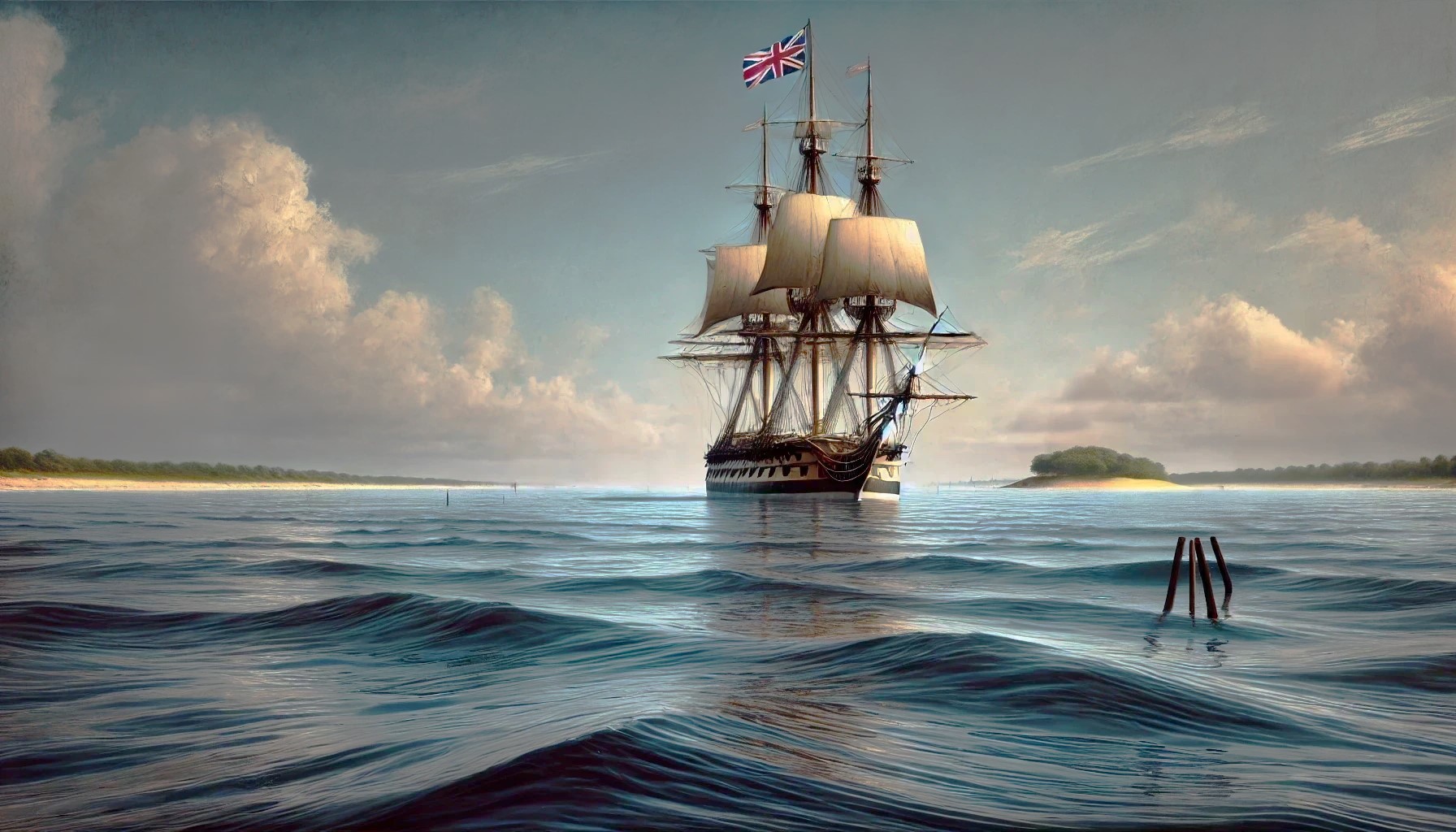
And 250 years ago today, on March 7, 1775, five of Plymouth County’s most prominent Loyalist magistrates wrote a desperate plea. They didn’t write to General Gage, the military governor, or other Crown officials in Boston. Instead, they went straight to the Royal Navy, addressing Vice Admiral Samuel Graves, who commanded the fleet anchored in Boston Harbor.
Why? By early March, the magistrates knew the time for debate had passed. The Revolution was not a distant storm on the horizon—it was here. And they were trapped.
The balance of power on the South Shore (everywhere but Marshfield) had shifted firmly to the Patriots. The royal courts had been shut down by armed mobs the previous summer. Patriot Committees controlled most town governments. And the residents of Plymouth—who had once been their neighbors, their colleagues—now viewed them as enemies of liberty.
The magistrates’ letter made their fears plain:
…The tumults & disorders which are prevalent in said county, have justly alarmd the small number of Loyal & well affected persons, who reside in the Shiretown, & towns adjacent and (from a variety of threats & insults which have lately been offer’d them) they are apprehensive that an attempt will be speedily made to secure & detain their persons.
They admitted openly what they feared: that the Patriots—”rebellious & inhuman rioters”—would soon come for them and drag them from their homes. Their very lives, and those of their families, were now at risk.
Escape by land was impossible, they explained. They were some forty miles by road from “the metropolis,” meaning Boston. Every road leading from Plymouth and Middleborough and Bridgewater passed through Patriot-controlled towns, where the inhabitants, they warned, were “notoriously factious & malicious.” The magistrates had no illusions about what would happen should they attempt to flee by carriage or horseback. They would be intercepted and made to face a mob determined to humiliate them…or worse. So they begged for another way out.
We therefore in behalf of these his Majesty’s faithful & Loyal subjects, most earnestly request That an armed vessel may be ordered to the harbour of Plymouth, that so they and their innocent families may be assisted in their retreat…
This was their best hope—that a sizeable British warship would anchor off the Gurnet, not only to intimidate Patriots but, most importantly, provide escape for Loyalists and their families and, ultimately, refuge in British-occupied Boston.
The letter was signed by five men, among them Edward Winslow Jr., a man whose name carried the weight of generations in Plymouth. His father built an elegant house at the end of North Street now known as The Mayflower Society House (though it looked very different in 1775) and Edward Winslow, Jr. lived there. Both father and son were staunch Loyalists, but the younger was more outspoken and increasingly at odds with his neighbors.
Peter Oliver and Peter Oliver, Jr. of Middleborough also signed the letter. The elder Peter Oliver had been one of the most important men in the Province of Massachusetts as Chief Justice of the Superior Court. Peter Oliver, Jr. followed in his father’s footsteps, holding local office and benefiting from his family’s wealth, which was built on their extensive ironworks business.
Another signer was Josiah Edson of Bridgewater, a wealthy landowner and magistrate. He held prominent positions in the county’s government, but as Patriot sentiment surged in 1774–1775, he became a target of increasing hostility.
Had these men gotten their way, and a large British warship had appeared in Plymouth Bay, the entire region would have been thrown into turmoil. The sight of a warship looming offshore would have sent shockwaves through the South Shore, escalating tensions and possibly provoking an immediate Patriot response. While it’s impossible to know exactly how events would have unfolded, such a bold move could have dramatically altered the course of the Revolution in Plymouth County.
There are indications that Vice Admiral Graves received their letter in Boston, where British forces were already on edge, preparing for the inevitable conflict. He did not send a ship. There has been speculation that Graves sympathized with their plight but could not act to help them. Graves was under strict orders to prioritize military operations in Boston, where General Thomas Gage needed the Royal Navy to enforce trade restrictions, transport supplies, and prepare for potential conflict. With British forces already stretched thin and a looming confrontation with the Patriots, Graves likely saw evacuating civilian Loyalists as a low priority.
And so, the leading Loyalists of Plymouth County—except for those in Marshfield, who were fortunate to be protected by the King’s troops—were left with no choice but to risk the dangerous land route to Boston.

 Historical Digression
Leave a comment