

[In Part One of this tale, I told a creative version of Plymouth’s whaling story through the voice of a fictitious old salt. What follows now is the true history—Part Two: the rise of Plymouth’s whaling fleet. Part Three, to come, will recount the remarkable and tragic fall of the enterprise.]
On Leyden Street, the oldest in downtown Plymouth, stands a handsome house that blends with its neighbors—until you notice one small, distinctive detail: a brass door knocker shaped like a sperm whale. Here lived James Bartlett, Jr., the man who launched Plymouth’s whaling ventures in the 1820s, and a figure too often overlooked in the town’s history.
In 1821 Bartlett rallied two dozen investors to fit out Plymouth’s first whaleship. He was well suited for the task. The son of a successful captain and experienced as a supercargo on trading voyages, Bartlett had both pedigree and practical knowledge. His partners represented a cross-section of Plymouth society—merchants, lawyers, blacksmiths, shipowners, and tradesmen. Even younger men from established families, like 23-year-old Isaac L. Hedge and his 21-year-old brother Thomas, signed on, alongside seasoned mariners such as Ichabod and Southworth Shaw, and families like the Jacksons, Barneses, Ripleys, and Robbinses. Their collective backing shows how much hope Plymouth placed in whaling as a path to prosperity.
The lure was clear. Sperm oil commanded high prices for lamps, and baleen was in demand for corsets and umbrellas. Nantucket’s long whaling dominance, and New Bedford’s rising success, proved what was possible. Plymouth, Bartlett argued, could stand shoulder to shoulder with other Yankee ports.
Bartlett commissioned the construction of a 350-ton whaleship, christened the Mayflower (perhaps no surprise in its name—the 200th anniversary of the arrival of the original Mayflower had been celebrated just months before). Built in nearby Berkley, Massachusetts, the Mayflower slipped from Plymouth Bay in September of 1821, under Captain George Harris, bound for Pacific whaling grounds. Harris hailed from Nantucket, and so did much of her crew, as evidenced by a surviving log from the vessel’s second voyage in 1824. Bartlett and his partners clearly sought out seasoned whalemen, supplementing them with a handful of local recruits who would learn the trade at sea.
With the departure of the Mayflower, the town’s commerce, still somewhat sluggish from the War of 1812 slump, seemed to spring to life. A new fleet of whaling vessels would require an increased number of tradesmen and merchants in port: coopers, blacksmiths, ropemakers, bakers, and grocers. Bartlett even imported oil refiner William Collingwood from Nantucket to run a newly erected candleworks by the waterfront. Instead of sending raw oil away, Plymouth would refine it into high-value sperm whale oil candles. This first candle factory stood about where the gift shops now stand along Water Street near the foot of Winslow Street. The Hedge brothers later built a much larger refinery a bit further north.
As we picture the Mayflower setting out for the Pacific, it is worth recalling that by the 1820s whaling voyages had grown notoriously long. The Atlantic grounds, once teeming, had been worked for generations, and sperm whales in particular had grown scarce near home waters. Ships were driven farther and farther afield—first to the coast of Brazil, then around Cape Horn into the Pacific, and ultimately to remote hunting grounds off Japan or the Arctic seas. What had once been a year’s cruise could now stretch to three or even four, as captains pursued dwindling pods into the farthest corners of the oceans.
The Mayflower returned nearly three years later in 1824 with a haul of 2,300 barrels of sperm oil. More than enough to suggest Bartlett’s gamble could pay off. She sailed twice more to the Pacific for Bartlett et. al., ultimately delivering 6,650 barrels for her Plymouth owners. In 1830, Bartlett sold her to a New Bedford merchant, while wisely keeping partial ownership. The Mayflower continued her whaling days under new ownership out of New Bedford for another six voyages from 1831 to 1856. Ultimately, she was broken up for scrap in San Francisco in 1861, a common fate for many an old whaling ship. Indeed, San Francisco Bay once held a vast graveyard of Yankee vessels.
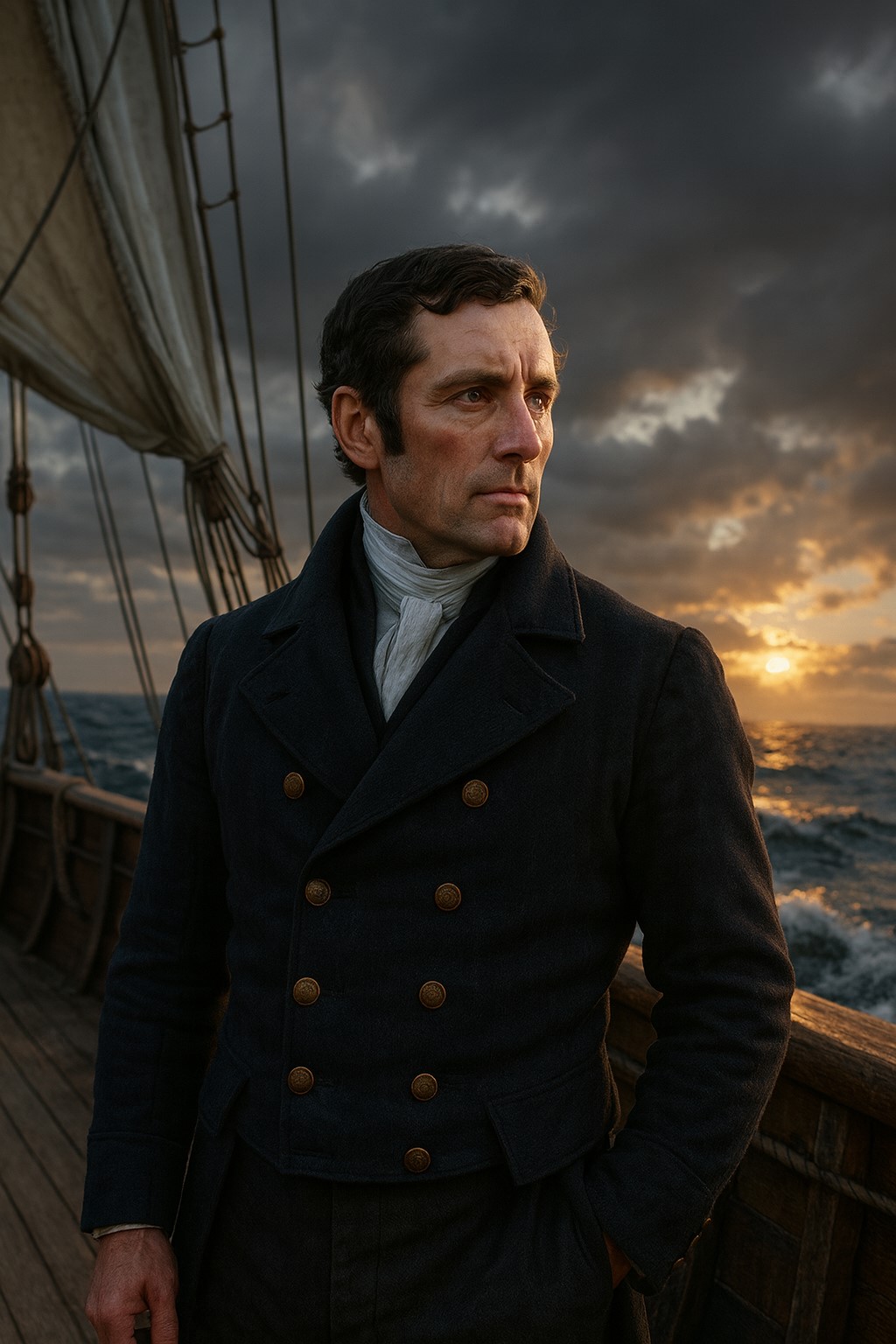
Consider, for a moment, the career of Capt. George Harris of Nantucket, whom Bartlett first hired to master the Mayflower and later made captain of Plymouth’s largest whaler, the Arbella (sometimes spelled Arabella). Between 1821 and 1834, Harris led four Pacific voyages—three on the Mayflower and one on the Arbella—spending nearly 11 years and 5 months at sea, and scarcely more than a cumulative year at home in that entire 13 year span. On average, his voyages lasted 2 years and 10 months, with only about four months ashore between them. It was a strange life indeed: one that veered between the thrill of chasing leviathans across the world’s oceans, arrivals in exotic ports, the tedium of endless weeks on empty seas, and the brutal, reeking labor of cutting in and rendering the whales.
In 1822, even before the Mayflower had returned from her first voyage, Bartlett organized a second venture. That year he and his partners commissioned the Fortune, a 280-ton ship built at Amesbury (and also named for a 17th century Pilgrim vessel). She shipped out under Captain Peter Coffin Myrick of Nantucket. On her maiden Pacific cruise she returned in 1825 with 2,000 barrels of sperm oil. Over time, her steady performance made her a local legend. Under Captain Charles P. Swain, also of Nantucket, she twice came home recorded as ‘full’—an uncommon designation in the returns. How many barrels that meant is uncertain, but it was likely more that 2,500 per voyage and cemented the Fortune’s reputation as Plymouth’s ‘greasiest,’ or most successful, whaler.
The whaleships began to carry such power and prestige in Plymouth that even the town’s classrooms could not hold back their spell. When a schoolmaster threatened to lash 17-year-old Nathaniel Lothrop Hedge, the youth quietly reached for his cap from the peg above his desk, placed it on his head, and walked out without a word. That day he signed aboard the Fortune. The tale speaks not only to the irresistible allure of the whaling life, but also to the ship’s reputation as a lucky vessel—one that promised fortune, in every sense of the word, to those bold enough to seize it.
In all, the Fortune completed six long Pacific voyages for her Plymouth owners before being sold to New Bedford interests in 1844. From there she carried on for another five voyages, pushing ever farther north into the Alaskan grounds as whalers chased dwindling stocks. Her final voyage ended in 1861, on the eve of the Civil War—and she would play a role in that conflict…though that tale must wait for Part Three.
Flush with returns during the late 1820s, Plymouth’s capitalists expanded. In 1830, Bartlett and partners acquired the ship Arbella (at 404 tons, Plymouth’s largest whaling vessel), which first sailed from Plymouth under Captain George Harris and later under Capt. Ellis C. Eldridge (likely a New Bedford captain). Over multiple voyages, she returned over 6,200 barrels of whale oil. She was withdrawn from whaling and moved to merchant freighting in 1838.
By 1831 the Hedge brothers, Isaac and Thomas, were ready to take a larger stake in the trade, acquiring the Levant (332 tons) with a circle of partners. Under Captain Thomas Russell she returned with 2,700 barrels and was sold in 1835 for $15,600—a handsome profit. Still in their early thirties, the Hedge brothers quickly rose to prominence: Isaac managed several vessels, while Thomas invested ashore, helping to establish a candle factory on the waterfront. Though the factory is long gone, his former home endures as the Hedge House Museum. Their ventures show how whaling appealed not only to established merchants but also to a younger generation willing to gamble on the promise of whale oil.
There is more to tell of Plymouth’s expanding fleet, and more still of the limits that hemmed it in—and of the sudden, uncanny unraveling that overtook the whole enterprise in the 1840s. That darker chapter awaits in Part Three, when the lantern of Plymouth whaling gutters out, leaving only the smoke and wreckage behind…

 Historical Digression
Leave a comment