

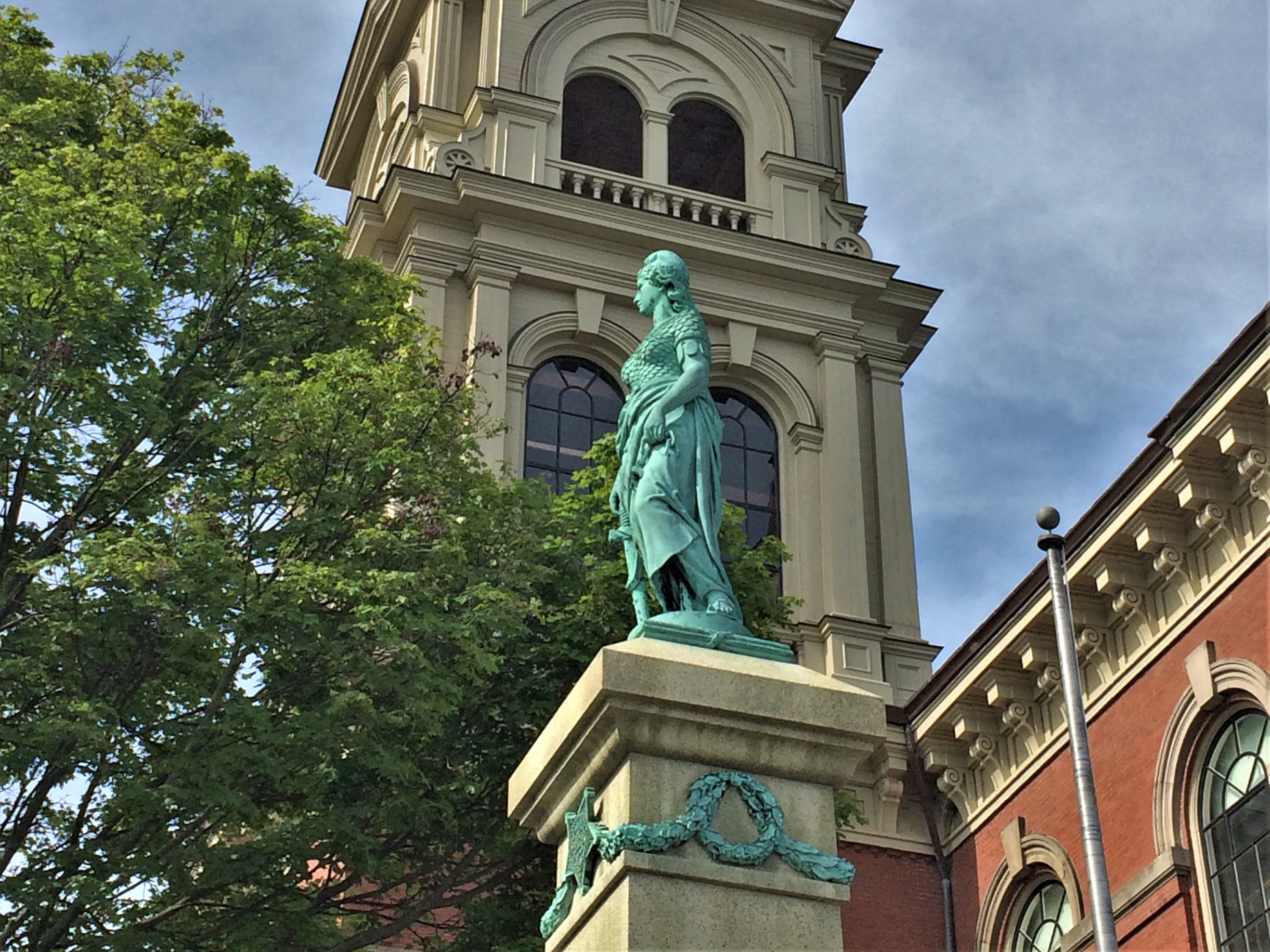
Technically, at least by the calendar, it’s still Memorial Day week—a fitting time to reflect on remembrance and the stories we choose to preserve. It’s also a meaningful moment for me personally, as my long-running side project—the Massachusetts Civil War Monuments Project—is finally approaching its conclusion.
The project began somewhat impulsively in 2016, during Memorial Day weekend, when I made an offhand remark on social media that I would try to photograph every Civil War monument in the Commonwealth. Nine years, countless road trips, thousands of photos, and many sunrise writing sessions later, I’m closing in on the final entries. What started as a simple photo collection gradually evolved into a full-fledged historical resource.
From the beginning, friends, librarians, local historical society members, and fellow historians generously contributed photographs and information. But even with help, locating the monuments wasn’t always easy. I quickly discovered that Civil War memorials in Massachusetts occupy a strange sort of limbo—they’re everywhere, yet barely noticed. In a state that was once a crucible of abolitionist fervor and enthusiastic support for the Union cause, many of these monuments now stand forgotten, quietly weathering the years in town squares and obscure corners.
More than once, I contacted a local organization in search of a monument I knew existed—only to be told they had no idea where it was. I’m not assigning blame; it’s simply a reflection of how these markers have receded from public consciousness. It made me wonder: What meaning do these monuments still hold in our communities? And what meaning could they hold, if we took the time to look again? I’ve tried to explore those questions on the site’s “About” page and in many posts since.
The photography phase wrapped up after five summers of road trips across Massachusetts, most of them shared with my partner Carolyn—a fellow historian and kindred spirit. These scavenger hunts led us to beautiful corners of the state we might never have otherwise visited. The journey was filled with great memories and unforgettable people; sometimes I think I should write about those experiences, too—perhaps someday.
At first, I imagined this would just be a collection of photographs. But the historian in me couldn’t resist adding context. Those brief notes soon grew into full essays, offering background not only on the monuments themselves, but also on each town’s Civil War history. The site launched in 2018, and since then I’ve published entries for 254 cities and towns, plus the various neighborhoods of Boston. Some towns have multiple monuments—Gloucester, for instance, has six, with each village seemingly determined to honor its own sons separately. The monuments range from grand structures like Boston’s 126-foot Soldiers and Sailors Monument (fittingly, the largest in the Commonwealth), to modest plaques in quiet Berkshire hilltown cemeteries.
Eighty-seven towns have no Civil War monument, which brings the grand total to 341 municipalities either posted or accounted for. That leaves a countdown of just 10 towns remaining to be posted. Reaching that number prompted this reflection—and yes, as you might expect, the largest remaining monuments are out on the islands. I’ve long suspected that Martha’s Vineyard and Nantucket would be the final challenge (and with a busy summer ahead, I’m not sure when I’ll get out there). A few remaining small plaques from western Massachusetts, already photographed, also await their turn to be posted.
With luck—and time—the full project will be complete in a few months. Unless, of course, another monument turns up unexpectedly… as they often do.
If you live in Massachusetts and want to learn more about your town’s monument—or discover whether there is one—please visit the site. The “Index” page is a good place to start. You can find the project at:
macivilwarmonuments.com
If you’ve been following along on this journey–thanks. Here’s to the monuments still standing—and the stories they can still tell.



 Historical Digression